What Is Human Resource Management? Complete Beginner’s Guide to HR Careers in 2026
Human Resource Management (HRM) is one of the most important functions in every modern organization. From recruitment and onboarding to employee engagement and payroll management, HR professionals help businesses manage people effectively and improve workplace productivity.
If you are wondering what is Human Resource Management, what HR professionals do, and whether HR is a good career option in 2026, this complete beginner-friendly guide covers everything you need to know.
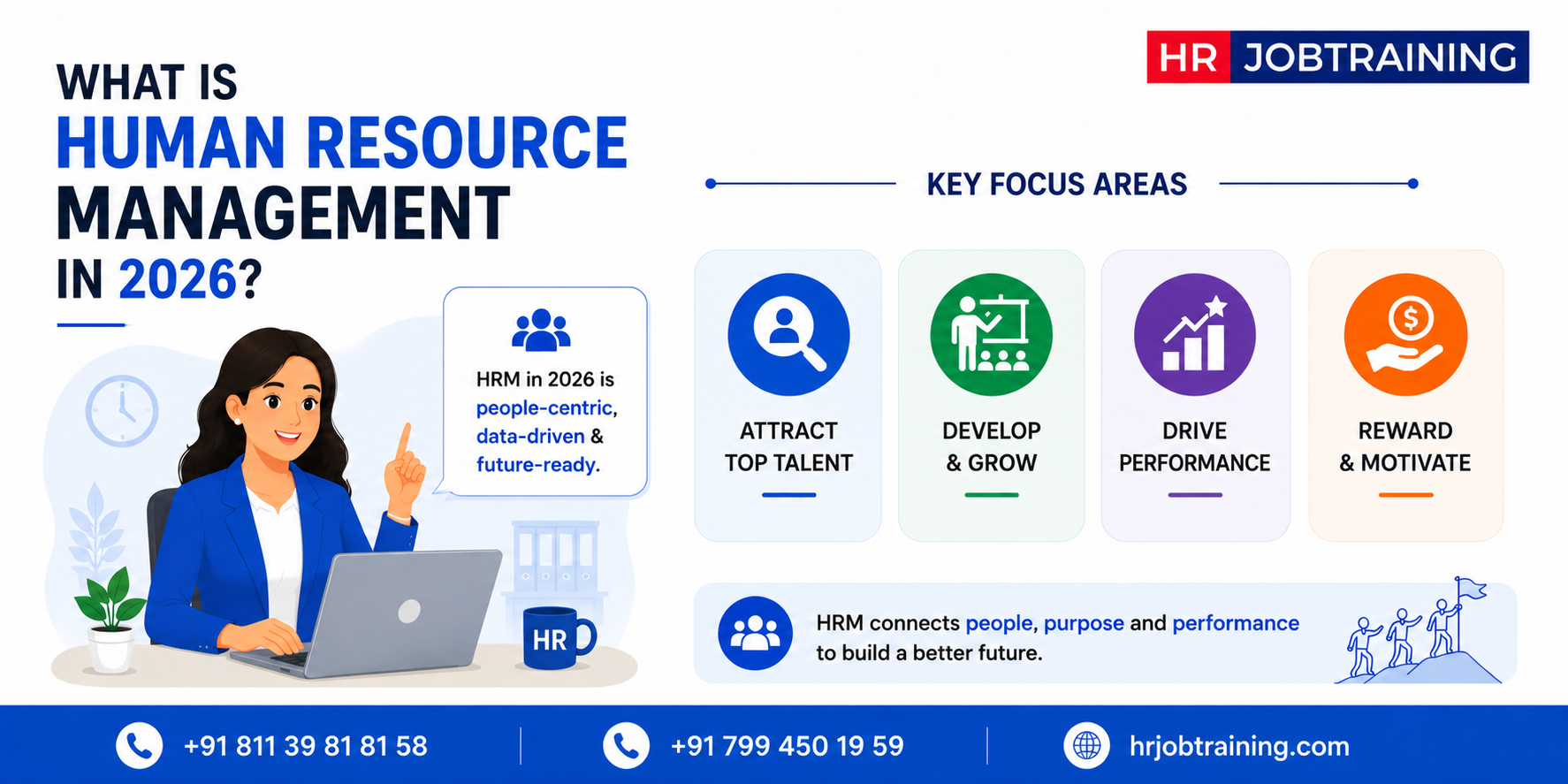
Human Resource Management (HRM) is the process of recruiting, managing, training, supporting, and developing employees within an organization to improve business performance, employee satisfaction, and organizational growth.
✓ Key Takeaways
- According to SHRM, organizations with highly effective HR practices achieve up to 3.5x the revenue growth of competitors with weak HR systems.
- The U.S. Bureau of Labor Statistics projects HR management roles to grow 5% through 2032, faster than the average for all occupations.
- A LinkedIn Workforce Report found that companies with dedicated HR teams see 23% lower employee turnover compared to those without structured HR functions.
- HR careers span seven core specializations — from recruitment and payroll to HR analytics — with entry-level salaries in India ranging from ₹2.5 LPA to ₹4.5 LPA.
- Demand for HR professionals in GCC and UAE companies has grown steadily, making international HR careers a strong option for Kerala-based graduates.
Table of Contents
- What Is Human Resource Management?
- What Is HR?
- Why HRM Is Important
- Core Functions of HR
- Difference Between HR and HRM
- Types of HR Careers
- Skills Required for HR Jobs
- HR Tools Used in Companies
- HR Salary in India and UAE
- Why HR Is a Good Career
- HR Courses and Qualifications
- Latest HR Trends
- A Typical Day in HR
- How to Start an HR Career
- FAQs
What Is Human Resource Management?
Research by McKinsey & Company found that organizations with strong people management practices outperform their peers by 22% in productivity and experience significantly lower voluntary turnover. This makes Human Resource Management one of the highest-impact business functions in any industry.
Human Resource Management (HRM) refers to the complete process of managing employees within an organization. It includes recruitment, onboarding, training, payroll, employee engagement, workplace communication, performance management, and organizational development.
HR management focuses on building productive teams while supporting employee growth, workplace satisfaction, and business success. Today’s HR professionals contribute directly to recruitment strategy, employee retention, workplace culture, leadership development, and workforce planning — responsibilities that go far beyond traditional administration.
A well-structured HR department serves as the operational backbone of any growing organization. Across Kerala, India, UAE, and global markets, businesses depend on HR teams to deliver consistent results across several key areas:
- Hire skilled employees
- Improve employee productivity
- Build strong workplace culture
- Support employee development
- Improve communication
- Reduce workplace conflicts
- Increase employee engagement
- Help organizations achieve business goals
Students interested in HR careers can also explore HR career opportunities in Kerala, HR career opportunities in India, and HR career opportunities in UAE.
What Is HR?
According to the Society for Human Resource Management (SHRM), over 70% of employees say HR directly influences their day-to-day work experience — from how they are onboarded to how their performance is reviewed and rewarded. HR is not just a department; it is the link between an organization’s strategy and its people.
HR stands for Human Resources. It refers to the department responsible for managing employee-related activities inside an organization.
HR professionals handle recruitment, payroll, attendance, onboarding, employee engagement, training, workplace communication, employee support, and HR administration tasks.
Many beginners often confuse HR and HRM. While both are closely connected, there are important differences between administrative HR responsibilities and strategic Human Resource Management practices. Learn more about the difference between HR and HRM.
Today’s HR professionals help organizations:
- Build healthy workplace culture
- Improve employee productivity
- Reduce employee turnover
- Support leadership development
- Improve employee satisfaction
- Manage organizational growth
Difference Between HR and HRM
| HR | HRM |
|---|---|
| Focuses on employee-related activities | Focuses on workforce management strategy |
| Administrative role | Strategic management role |
| Handles daily HR tasks | Supports long-term business goals |
Why Human Resource Management Is Important
A Gallup study found that businesses with highly engaged workforces — driven by strong HR practices — record 21% higher profitability and 17% higher productivity than those with disengaged employees. Employees are the foundation of every organization, and HR is the function that keeps that foundation strong.
Human Resource Management helps businesses recruit talented employees, improve workplace productivity, develop leadership, and maintain employee satisfaction. Companies that treat HR as a strategic function — not just a support department — consistently outperform those that don’t.
Companies now treat HR departments as strategic business partners, not just administrative teams — because workforce quality directly determines competitive advantage.
Effective HR practices improve employee engagement, communication, workforce planning, retention, and organizational growth.
Core Functions of Human Resource Management
According to Deloitte’s Global Human Capital Trends report, 80% of business leaders now rank HR capability as a top organizational priority. Human Resource Management covers multiple responsibilities that directly affect employee performance and business growth — each function building on the last to create a productive, compliant, and engaged workforce.
1. Recruitment and Talent Acquisition
LinkedIn’s 2025 Global Talent Trends report found that companies with a structured recruitment process fill roles 40% faster and report higher quality-of-hire scores. Recruitment is one of the most important HR responsibilities — HR professionals identify hiring needs, prepare job descriptions, screen resumes, coordinate interviews, and hire qualified candidates.
Understanding the step-by-step HR recruitment process helps beginners understand how organizations build productive teams.
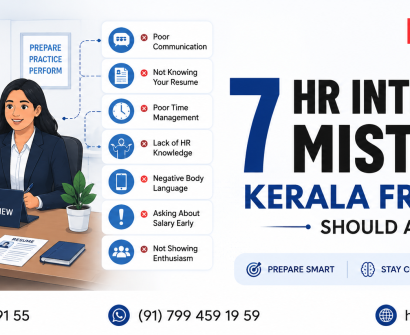
Students preparing for recruitment careers can also explore these HR interview questions for freshers to improve interview confidence and communication skills.
Why Structured Recruitment Matters
A structured recruitment process benefits both the organization and the candidate. When HR teams follow a consistent hiring framework, they reduce bias, improve candidate experience, and make faster, more confident decisions. Key benefits include:
- Improves quality of new hires
- Reduces time-to-fill for open roles
- Ensures fair and unbiased selection
- Improves employer brand reputation
- Reduces early employee turnover
2. Employee Onboarding
Research by the Society for Human Resource Management (SHRM) shows that organizations with a strong onboarding program improve new hire retention by 82% and productivity by over 70%. After recruitment, HR teams help employees adjust to the workplace through structured onboarding programs that set the tone for long-term engagement.
A structured HR employee onboarding process helps employees understand workplace expectations, company policies, and communication systems.
Beginners can also explore this beginner-friendly guide on the employee onboarding process explained.
Benefits of Effective Onboarding
Getting onboarding right pays dividends across the entire employee lifecycle. Organizations that invest in structured onboarding see measurable improvements across several performance indicators:
- Improves employee confidence
- Supports workplace communication
- Improves retention rates
- Reduces employee confusion
- Improves productivity
3. Training and Development
The LinkedIn Workplace Learning Report 2025 found that 94% of employees say they would stay longer at a company that invests in their career development. Training and development are major responsibilities in Human Resource Management — HR departments organize workshops, HR software training, leadership programs, and employee skill development sessions.
Students interested in professional HR learning can explore best HR courses for career growth and practical HR training programs.
HR careers also require strong workplace communication abilities. Explore these HR communication skills that companies expect from HR professionals in 2026.
4. Payroll and Compensation Management
A PwC survey found that 72% of employees report that payroll errors directly damage their trust in an employer, and one-third would begin job hunting after a single payroll mistake. HR professionals manage salary processing, attendance systems, payroll compliance, employee benefits, leave management, and compensation structures — making accuracy in this function critical to employee satisfaction and retention.
5. Performance Management
According to Gallup, only 14% of employees strongly agree their performance reviews inspire them to improve. This gap represents a major opportunity for HR teams to redesign appraisal systems that actually drive growth. HR departments monitor employee performance through appraisals, goal tracking systems, and feedback processes — helping organizations identify high performers and improve workforce productivity.
Learn more about the importance of performance management in Human Resources and how appraisal systems improve employee growth.
6. Employee Engagement and Workplace Culture
Gallup’s State of the Global Workplace 2025 report estimates that low employee engagement costs the global economy $8.9 trillion annually — equivalent to 9% of global GDP. HR teams focus on employee engagement, workplace communication, and company culture development because retention and satisfaction are now as important as recruitment.
Employee engagement has become one of the core functions of Human Resource Management because companies now prioritize long-term workforce stability.
Common Employee Engagement Initiatives
Effective HR teams build engagement through a consistent mix of recognition, community, and well-being programs. The most widely adopted initiatives across organizations of all sizes include:
- Recognition programs
- Team-building activities
- Employee wellness programs
- Workplace support systems
- Communication initiatives
Explore these employee engagement strategies used by modern HR teams.
7. HR Compliance and Labor Laws
According to the SHRM, non-compliance with labor laws costs U.S. businesses over $20 billion annually in fines, litigation, and settlements — a figure that underscores how critical compliance management is within HR. HR professionals ensure organizations follow labor laws, employee rights regulations, workplace safety policies, and payroll compliance rules.
For international and GCC companies, HR professionals must also understand workforce regulations and global HR practices.
Types of HR Careers
The U.S. Bureau of Labor Statistics projects HR specialist roles to grow 8% between 2023 and 2032, faster than the national average, with demand particularly strong in healthcare, technology, and GCC-based companies. HR careers offer multiple specialization pathways, giving professionals the flexibility to grow in directions that match their strengths.
Whether you are interested in people-facing roles or back-end workforce administration, the HR field has a specialization for you. The most common HR career paths include:
- HR Executive
- Talent Acquisition Specialist
- Payroll Specialist
- HR Generalist
- HR Manager
- HR Business Partner
- HR Administrator
Students and freshers can explore different HR specializations based on their career interests. This detailed guide on the HR career path explained helps beginners understand long-term HR career growth opportunities.
Skills Required for HR Jobs
A 2025 LinkedIn Skills on the Rise report identified HR professionals with combined soft and technical skills as 40% more likely to be promoted within three years compared to those with only administrative experience. To build a successful HR career, professionals need both technical knowledge and interpersonal abilities.
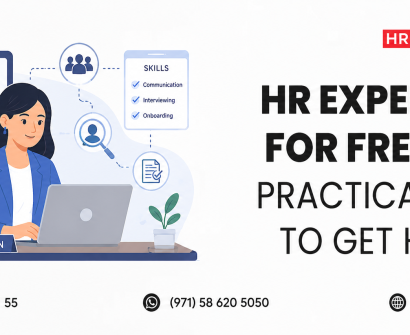
Employers look for professionals with strong communication skills, HR software knowledge, recruitment expertise, payroll understanding, and workplace management capabilities.
Explore these top HR skills required for HR jobs to understand what modern organizations expect from HR professionals.
Communication Skills
HR professionals must communicate clearly with employees, managers, candidates, and leadership teams.
Leadership and Problem-Solving
HR departments regularly manage employee concerns, workplace conflicts, and performance-related issues.
Organizational Skills
HR teams manage multiple responsibilities including recruitment, payroll, onboarding, training, documentation, and compliance.
HR Software Knowledge
Digital transformation has made HR software proficiency a baseline requirement across most organizations. Employers now expect HR candidates to be comfortable working with systems that automate and streamline key processes, including:
- Recruitment management
- Payroll processing
- Attendance tracking
- Performance management
- Workforce analytics
Students interested in enterprise HR systems can explore SAP HCM certification for HR professionals and modern workforce management tools.
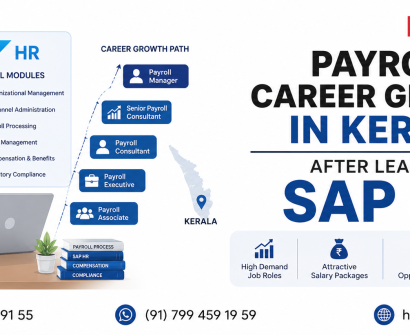
Professionals interested in ERP-based HR systems can also explore this SAP HR course in Kerala designed for beginners and HR professionals.
HR Tools Used in Companies
Grand View Research estimates the global HR technology market will reach $39.9 billion by 2029, growing at a CAGR of 7.5%. Organizations across industries are accelerating their adoption of digital HR platforms to reduce manual workloads, improve data accuracy, and support remote workforce management.
| HR Tool | Purpose |
|---|---|
| SAP HR | Enterprise HR management |
| Oracle HCM | Workforce management |
| BambooHR | Employee automation |
| Zoho People | Payroll and attendance management |
| Workday | HR analytics and workforce planning |
Many organizations now prefer candidates with HR software and automation knowledge because digital HR systems are becoming standard across industries.
HR Salary in India and UAE
According to Naukri.com’s 2025 HR Salary Report, HR professionals in India with 3–5 years of experience and HR software certification earn 35–45% more than those without certified skills. Salaries vary significantly by role, industry, and geography — with UAE and GCC positions typically offering 2–3x the equivalent Indian salary due to tax-free income structures.
| HR Role | Average Salary Range |
|---|---|
| HR Executive | ₹2.5 LPA – ₹4.5 LPA |
| HR Generalist | ₹4 LPA – ₹7 LPA |
| HR Manager | ₹8 LPA – ₹15 LPA |
| Talent Acquisition Specialist | ₹4 LPA – ₹8 LPA |
Many professionals now explore HR career opportunities in UAE because of better salary packages and international exposure.
Students interested in GCC opportunities can also explore the best HR course for UAE jobs in Kerala to understand how international HR training supports Gulf career opportunities.
Why Human Resource Management Is a Good Career
The World Economic Forum’s Future of Jobs Report 2025 lists HR and People Management among the top 10 fastest-growing job families globally through 2030, driven by workforce digitization, remote work expansion, and the growing importance of employee experience. Every industry now depends on HR professionals to manage workforce operations, engagement, recruitment, compliance, and workplace culture.
One of the strongest features of an HR career is its cross-industry applicability. HR professionals are in demand across virtually every sector, giving graduates the flexibility to work in environments that align with their interests:
- IT companies
- Healthcare organizations
- Retail businesses
- Educational institutions
- Manufacturing firms
- Startups
- GCC companies
Students interested in long-term HR growth can explore HR career opportunities in India and modern HR specialization paths.
HR Courses and Qualifications
A 2025 SHRM survey found that 67% of HR hiring managers prefer candidates with both a formal qualification and practical HR software experience over those with academic credentials alone. There are multiple educational pathways for students who want to build a career in Human Resource Management.
Choosing the right qualification depends on your current education level, time availability, and target job market. The most commonly pursued HR credentials in India include:
- BBA
- MBA in HR
- HR diploma programs
- HR certification courses
- SAP HR certification
Explore these top HR qualifications for career growth to understand what employers expect from modern HR professionals.
Students looking for practical HR learning can also explore industry-focused HR training programs designed for workplace readiness.
Want to Start Your HR Career?
Gain practical HR skills, payroll knowledge, recruitment training, HR software exposure, SAP HR learning, and placement-oriented HR training with HRJobTraining.Explore HR CoursesEnquire Now
Latest Trends in Human Resource Management
Gartner’s 2025 HR Priorities Survey found that 76% of HR leaders say they are overwhelmed by the pace of technological change — with AI adoption, remote workforce management, and employee well-being identified as the three most disruptive trends reshaping the profession right now.
AI in HR
AI-powered tools have moved from experimental to standard across recruitment, resume screening, employee analytics, workforce planning, and performance tracking. A 2025 Korn Ferry study found that companies using AI in recruitment reduce hiring time by up to 30%.
Explore how AI in HR is changing recruitment and workforce management for HR professionals in 2026.
Remote Workforce Management
Hybrid and remote work models have fundamentally changed how HR teams manage communication, productivity, and employee engagement — requiring new tools, policies, and HR competencies.
Employee Well-Being
Organizations have shifted from treating well-being as a benefit to treating it as a business strategy. Mental health support, flexible work culture, and employee well-being initiatives now appear in the majority of Fortune 500 HR roadmaps for 2026.
A Typical Day in the Life of an HR Professional
Many beginners are curious about what HR professionals actually do every day. HR responsibilities vary depending on industry, organization size, and job role.
While no two HR days are identical, most HR professionals move through a predictable rhythm of people-facing tasks and administrative work. A typical day might involve:
- Conducting interviews
- Coordinating onboarding programs
- Managing attendance systems
- Handling employee concerns
- Organizing training sessions
- Processing payroll information
- Preparing HR reports
- Communicating with managers
Explore this detailed guide on a day in the life of an HR professional to understand real workplace HR responsibilities.
How to Start a Career in Human Resource Management
Step 1: Learn HR Fundamentals
Understand recruitment, payroll, onboarding, compliance, employee communication, and workforce management basics.
Step 2: Get Practical HR Training
Many companies now prefer candidates with practical workplace exposure and HR software knowledge.
Step 3: Improve Communication Skills
Communication is one of the most important skills for HR professionals because they interact with employees and management teams daily.
Step 4: Learn HR Software Systems
HR departments use payroll software, recruitment systems, attendance tools, and HR analytics platforms — proficiency in at least one platform significantly improves employability.
Step 5: Stay Updated With HR Trends
Follow HR blogs, AI trends, labor law updates, and workforce management developments regularly.
HR Training Courses Across Kerala
Students searching for practical HR courses, SAP HR training, payroll management programs, and placement-oriented HR training can explore HR training centers across Kerala.
- HR courses in Kochi
- Human Resource courses in Thrissur
- HR training institutes in Kozhikode
- HR training courses in Palakkad
- HR courses in Malappuram
- HR training courses in Kannur
- HR management courses in Ernakulam
- HR courses across Kerala
FAQs About Human Resource Management
What are the main functions of Human Resource Management?
The main functions of Human Resource Management include recruitment, onboarding, payroll management, employee engagement, training and development, performance management, compliance, and workforce planning.
What qualifications are needed for HR jobs?
Most HR professionals complete BBA, MBA in HR, HR diploma programs, HR certification courses, or SAP HR training programs.
Is Human Resource Management a good career in 2026?
Yes. Human Resource Management is one of the fastest-growing career fields because companies increasingly depend on HR professionals for recruitment, workforce management, employee engagement, and organizational development.
What is the difference between HR and HRM?
HR focuses mainly on employee-related activities, while HRM focuses on strategic workforce planning, employee development, and organizational growth.
What skills are required for HR jobs?
Important HR skills include communication, leadership, recruitment, payroll management, employee engagement, organizational skills, HR software knowledge, and problem-solving abilities.
What does an HR executive do?
An HR executive manages recruitment, onboarding, attendance, payroll coordination, employee communication, documentation, and HR administration activities.
Are HR jobs available in UAE?
Yes. UAE and GCC companies regularly hire HR professionals for recruitment, payroll administration, employee relations, and workforce management roles.
What is the salary of HR professionals in India?
Entry-level HR executives in India generally earn between ₹2.5 LPA and ₹4.5 LPA depending on industry, location, and experience.
Can freshers start a career in HR?
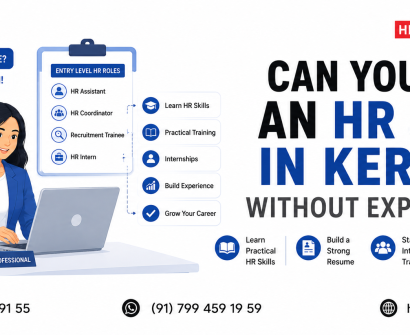
Yes. Many organizations hire freshers for HR assistant, recruitment coordinator, payroll support, and HR executive roles.
Is SAP HR useful for HR careers?
Yes. SAP HR and SAP HCM systems are widely used by organizations for payroll management, attendance tracking, employee records, and workforce planning.
Which industries hire HR professionals?
HR professionals are hired across IT companies, healthcare organizations, retail businesses, educational institutions, startups, manufacturing firms, and GCC companies.
How can I start an HR career after graduation?
You can start an HR career by learning recruitment, onboarding, payroll management, HR software systems, communication skills, and gaining practical HR training experience.
Conclusion
Understanding what is Human Resource Management is the first step toward building a successful and future-focused career.
HR management has expanded well beyond administrative tasks. Today’s HR professionals contribute directly to recruitment, onboarding, payroll, employee engagement, organizational development, workplace culture, HR analytics, and business growth.
With increasing opportunities across Kerala, India, UAE, and international companies, HR has become one of the best career options for students interested in communication, leadership, and people management.
Companies actively look for HR professionals with practical workplace knowledge, HR software expertise, communication abilities, and workforce management understanding.
For beginners looking to build industry-ready skills, joining a professional HR training program can significantly improve employability and career growth opportunities.
Explore HR courses at HRJobTraining to start building practical HR knowledge and workplace-ready HR skills.
Related HR Resources
Continue learning with these recommended HR career and training guides.
HR Career in UAE What Does an HR Professional Do? Best HR Courses Employee Engagement Strategies SAP HCM Certification