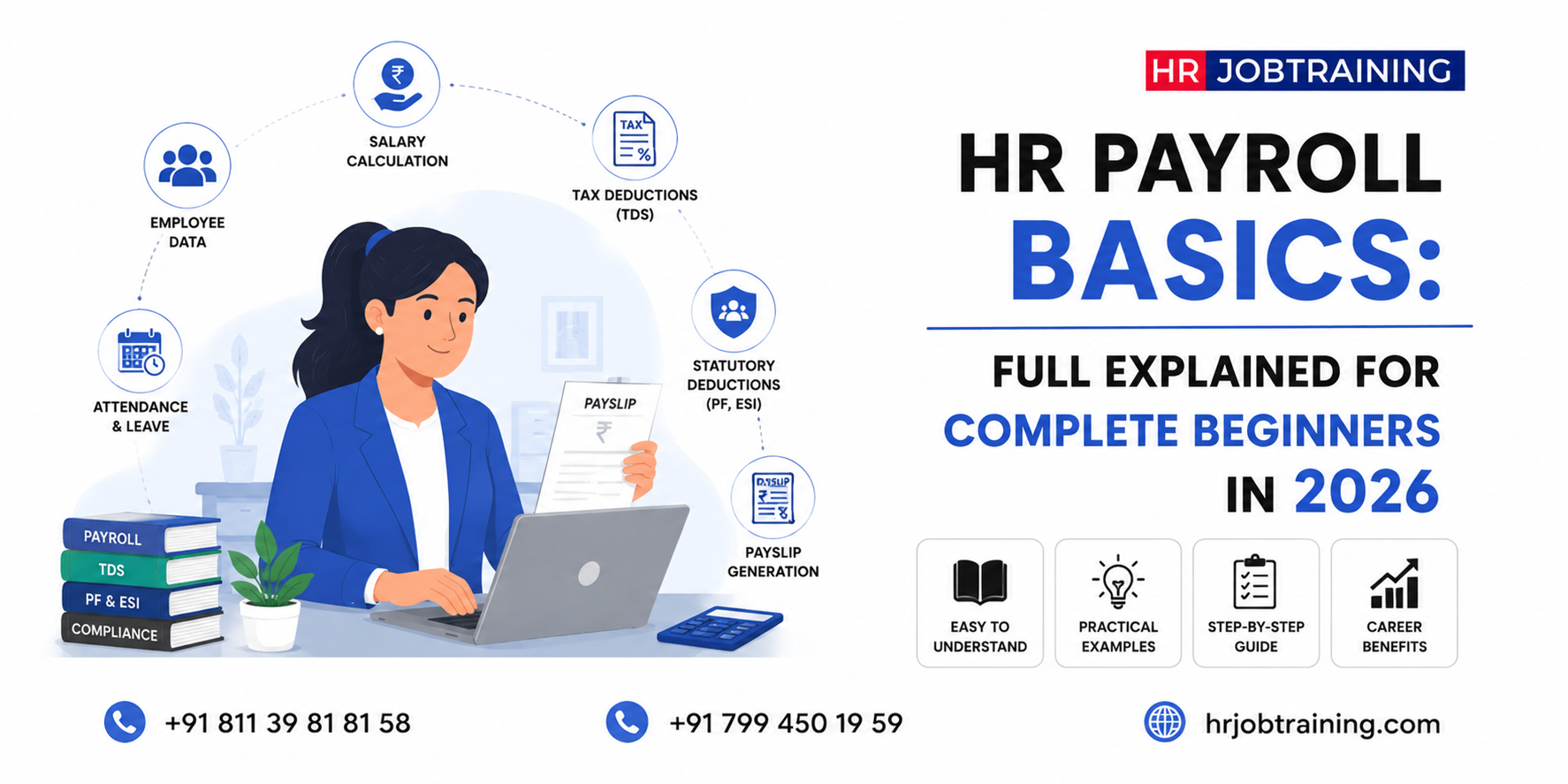
HR Payroll Basics Explained for Beginners in 2026
Payroll is one of the most important operational functions inside Human Resource Management. Every organization — from startups and small businesses to multinational corporations — depends heavily on payroll systems to manage employee salaries, attendance records, deductions, tax compliance, compensation structures, and salary reporting processes accurately.
In 2026, payroll management is no longer limited to simply calculating monthly salaries. Modern payroll processing in HR now involves advanced payroll software systems, attendance management platforms, compliance tracking, salary structure planning, statutory deductions, HR analytics, automated payroll workflows, and digital reporting systems.
Because organizations increasingly rely on technology-driven HR operations, payroll professionals today are expected to understand both HR management processes and payroll software systems to manage employee compensation efficiently and maintain operational accuracy.
This growing demand for practical payroll knowledge has made payroll management training one of the most valuable skill areas for HR freshers and HR professionals entering modern workplace environments.
Students searching for beginner-friendly payroll learning commonly ask questions such as:
- What is payroll in HR?
- Is payroll part of Human Resource Management?
- What payroll software do companies use?
- What are payroll executive responsibilities?
- How can HR freshers learn payroll practically?
- Is payroll a good HR career option in 2026?
- What skills are required for payroll jobs?
Students looking for industry-oriented payroll and HR operations training often explore practical HR payroll training programs in Palakkad because modern employers increasingly prefer HR professionals who understand payroll workflows, HR software systems, salary processing, attendance management, and compliance reporting.
Why Payroll Skills Matter in Modern HR Careers
Payroll is no longer considered only an accounting responsibility. Modern HR departments increasingly manage payroll coordination, attendance integration, compensation processing, compliance documentation, payroll software systems, and employee salary communication. Because of this shift, payroll knowledge has become one of the most valuable practical HR skills for workplace-ready HR professionals in 2026.
Table of Contents
- What Is Payroll in HR?
- Why Payroll Management Is Important
- Step-by-Step Payroll Process Explained
- Salary Structure and Salary Components Explained
- Payroll Deductions and Compliance Basics
- Payroll Software Used by Companies
- Important Payroll Skills HR Freshers Should Learn
- SAP HCM and Payroll Management
- Common Payroll Mistakes Beginners Should Avoid
- Career Opportunities in Payroll HR
- How Practical HR Training Helps Learn Payroll
- How to Choose the Right Payroll Training Program
- Final Thoughts
- FAQs
What Is Payroll in HR?
Payroll in HR refers to the complete process of calculating, managing, processing, and distributing employee salaries inside organizations. Payroll management includes multiple operational activities such as attendance tracking, overtime calculations, tax deductions, PF and ESI processing, payslip generation, salary transfers, payroll reporting, and compliance documentation.
Inside most organizations, payroll processing begins several days before salary disbursement. HR and payroll teams collect attendance records, approved leave information, overtime details, shift schedules, employee compensation updates, and deduction information before payroll calculations begin.
Modern organizations increasingly automate these workflows using payroll software systems and HRMS platforms to improve payroll accuracy, reduce manual errors, and simplify compliance reporting.
Payroll management directly affects employee satisfaction because salary accuracy and timely payments strongly influence employee trust and workplace morale. Because of this, companies consider payroll management one of the most sensitive and operationally critical HR functions.
Students new to HR can also explore core HR functions explained in Human Resource Management and real workplace responsibilities handled by HR professionals to better understand how payroll management fits inside modern HR operations.
Why Payroll Management Is Important
Payroll management plays a major role in organizational stability, employee satisfaction, legal compliance, and financial accuracy. Even small payroll mistakes can create salary disputes, compliance penalties, employee dissatisfaction, tax complications, and workplace frustration.
This is one of the main reasons why companies prioritize payroll accuracy and increasingly invest in payroll software systems, HRMS platforms, SAP HR tools, and automated payroll workflows.
| Payroll Area | Why It Matters | Impact on Organization |
|---|---|---|
| Salary Processing | Ensures employees receive accurate salaries | Improves employee trust and retention |
| Compliance Management | Helps follow labor and tax regulations | Reduces legal and financial risks |
| Attendance Integration | Connects leave and attendance with salary calculations | Improves payroll accuracy |
| Payroll Reporting | Maintains salary records and reports | Supports audits and compliance |
| Payroll Automation | Reduces manual payroll errors | Improves operational efficiency |
Modern payroll systems also help organizations improve salary processing speed, automate calculations, simplify compliance workflows, and generate payroll reports more efficiently.
Step-by-Step Payroll Process Explained
Many beginners assume payroll only means salary payment. In reality, payroll processing in HR involves multiple structured workflows and operational activities every month.
Step 1: Attendance and Leave Collection
The payroll process begins with collecting attendance records, leave data, overtime details, shift schedules, and employee work-hour information. Most organizations now use attendance management software integrated with payroll systems to automate attendance tracking.
Step 2: Salary Structure Calculation
During payroll processing, payroll teams calculate employee salary structures including basic salary, allowances, bonuses, overtime payments, incentives, and statutory deductions. These calculations differ depending on company policies, compensation structures, attendance records, and employee salary packages.
Step 3: Payroll Deductions and Compliance
Payroll professionals process deductions such as Provident Fund (PF), Employee State Insurance (ESI), Tax Deducted at Source (TDS), professional tax deductions, unpaid leave deductions, and other statutory compliance requirements.
Compliance accuracy during this stage is extremely important because payroll errors can create financial penalties, legal issues, and employee complaints.
Step 4: Payslip Generation
After salary calculations and deduction verification, payroll systems generate employee payslips containing salary breakdowns, deduction details, net salary information, attendance data, and tax-related information.
Step 5: Salary Transfer and Reporting
After final payroll verification, organizations transfer salaries to employee bank accounts and generate payroll reports for financial tracking, audits, tax filing, and compliance documentation.
| Payroll Stage | HR Responsibility | Common Payroll Tools |
|---|---|---|
| Attendance Collection | Track leave and work hours | HRMS Software |
| Salary Processing | Calculate employee salaries | Payroll Software |
| Compliance Management | PF, ESI, TDS calculations | SAP HCM / ERP Systems |
| Payslip Generation | Create employee salary slips | Payroll Platforms |
| Reporting | Generate payroll reports | HR Analytics Systems |
Salary Structure and Salary Components Explained
Understanding salary structure is one of the most important payroll basics for HR beginners. Employee salary packages are usually divided into multiple salary components based on company compensation policies and payroll regulations.
Common salary components include:
- Basic Salary
- House Rent Allowance (HRA)
- Special Allowances
- Travel Allowances
- Bonuses and Incentives
- Overtime Payments
- PF and Tax Deductions
Payroll professionals must understand these salary components because accurate salary structuring directly affects payroll calculations, compliance management, and employee compensation reporting.
Payroll Deductions and Compliance Basics
Payroll compliance is one of the most critical responsibilities in payroll administration. Organizations must follow labor regulations, tax policies, employee benefit rules, and salary compliance standards while processing payroll.
Important payroll compliance areas commonly include Provident Fund (PF), Employee State Insurance (ESI), Tax Deducted at Source (TDS), and professional tax regulations.
Payroll professionals must understand these compliance responsibilities carefully because payroll errors can lead to:
- legal complications
- government penalties
- employee salary disputes
- tax-related issues
- compliance violations
Because compliance management has become increasingly important in modern HR operations, employers now prefer payroll professionals who understand practical payroll workflows, payroll software systems, and statutory deduction processes.
Payroll Software Used by Companies
Modern payroll management heavily depends on software systems, automation tools, and integrated HR technology platforms. Most organizations now use payroll management systems to automate salary calculations, attendance integration, payroll reporting, tax deductions, and employee compensation workflows.
Common payroll software tools used by companies include payroll software platforms, HRMS systems, attendance management software, ERP systems, and SAP HR solutions.
| Payroll Software | Purpose | Common Usage |
|---|---|---|
| HRMS Software | Employee and payroll management | Attendance and salary integration |
| Payroll Processing Tools | Salary calculations | Payroll automation |
| Attendance Systems | Track work hours and leave | Attendance integration |
| SAP HCM | Enterprise HR and payroll operations | Large organizations and MNCs |
| ERP Systems | Integrated payroll reporting | Finance and HR coordination |
Students interested in payroll software training can also explore SAP HCM payroll training courses in Kerala and SAP HCM certification programs for HR professionals to better understand software-oriented payroll management systems.
As payroll systems become increasingly technology-driven, organizations also expect HR professionals to understand automation workflows, digital payroll operations, and AI-powered HR systems. Students interested in future-focused HR careers can also explore how artificial intelligence is transforming HR operations and payroll systems.
Important Payroll Skills HR Freshers Should Learn
Payroll careers require a combination of technical skills, software knowledge, operational understanding, compliance awareness, and communication abilities.
Modern payroll professionals are expected to handle software-based payroll systems, employee salary communication, reporting processes, and payroll documentation accurately.
| Payroll Skill | Why It Matters |
|---|---|
| Excel Skills | Used for payroll reports and salary calculations |
| Payroll Software Knowledge | Important for payroll automation |
| Compliance Understanding | Helps manage PF, ESI, and TDS accurately |
| Attention to Detail | Reduces payroll calculation errors |
| Communication Skills | Helps handle employee payroll queries |
| HRMS System Knowledge | Supports integrated payroll workflows |
Students planning payroll and HR operations careers can also explore modern HR skills required for freshers in 2026 to better understand the practical software, reporting, compliance, and operational skills employers increasingly expect from workplace-ready HR professionals.
Communication is another important payroll skill because payroll professionals regularly coordinate with employees regarding salary clarifications, deduction explanations, attendance records, and compensation-related concerns. Students can also explore professional HR communication skills for modern workplace environments.
SAP HCM and Payroll Management
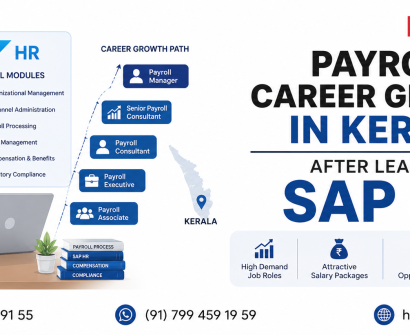
SAP HCM is one of the most widely used enterprise HR software systems in large organizations and multinational companies. SAP payroll systems help organizations manage salary calculations, payroll reporting, attendance integration, tax deductions, employee records, compliance management, and compensation structures more efficiently.
Because enterprise companies increasingly use SAP-based payroll systems, SAP payroll skills have become highly valuable for HR professionals pursuing payroll careers, HR operations roles, and software-oriented HR jobs.
Students interested in enterprise payroll systems often explore:
- SAP HCM courses in Ernakulam
- SAP HCM training programs in Thrissur
- SAP HR payroll training opportunities in Kerala
SAP payroll expertise can significantly improve employability for HR freshers planning careers in large companies, multinational organizations, Gulf countries, and software-oriented HR environments.
Common Payroll Mistakes Beginners Should Avoid
Payroll management requires strong attention to detail because even small payroll errors can affect employee trust, compliance accuracy, and salary processing reliability.
Common payroll mistakes beginners should avoid include:
- incorrect attendance records
- wrong salary calculations
- incorrect tax deductions
- delayed payroll processing
- poor payroll documentation
- incorrect compliance reporting
- software-related payroll errors
Practical payroll exposure and software-based payroll learning help HR freshers understand how payroll systems work inside organizations and reduce operational payroll mistakes effectively.
Career Opportunities in Payroll HR
Payroll management has become one of the fastest-growing specialization areas inside Human Resource Management because organizations increasingly depend on payroll software systems, compliance management, and operational HR processes.
Popular payroll career roles include:
- Payroll Executive
- Payroll Specialist
- HR Operations Executive
- Compensation and Benefits Executive
- Payroll Coordinator
- SAP Payroll Associate
- HR Payroll Analyst
Organizations across IT, healthcare, retail, manufacturing, logistics, finance, and Gulf countries actively hire payroll professionals with payroll software knowledge, SAP payroll skills, and practical HR operations experience.
Students planning international HR careers can also explore future HR career opportunities in the UAE and best HR training programs for UAE HR jobs.
How Practical HR Training Helps Learn Payroll
Payroll is a highly practical HR function. Theoretical HR learning alone often cannot fully prepare students for real payroll responsibilities handled inside workplace environments.
Practical payroll training helps students understand:
- real payroll processing workflows
- attendance integration systems
- payroll software usage
- salary calculation procedures
- employee salary coordination
- payroll compliance reporting
- HR documentation management
This is one of the main reasons why many students now prefer internship-oriented HR training programs, software-focused payroll training, and practical HR operations learning instead of purely theoretical HR education.
Students looking for workplace-ready payroll learning often explore practical HR training programs in Palakkad with payroll exposure, industry-oriented HR payroll certification courses in Palakkad, and job-focused HR training institutes in Bangalore because modern employers increasingly prefer HR professionals with operational payroll knowledge and software-based HR skills.
How to Choose the Right Payroll Training Program
Before joining any payroll or HR management course, students should carefully evaluate whether the training program includes practical payroll exposure, payroll software learning, HRMS systems, compliance workflows, and operational HR activities.
Good payroll training programs should include:
- payroll processing exercises
- attendance integration practice
- salary structure calculations
- payroll software exposure
- HRMS systems training
- SAP payroll basics
- compliance management understanding
- interview preparation support
Students preparing for payroll and HR interviews can also explore commonly asked HR interview questions for freshers to improve interview confidence and workplace readiness.
Final Thoughts
Payroll management is one of the most important operational functions inside Human Resource Management. As organizations increasingly adopt digital payroll systems, compliance automation, HR analytics, SAP payroll software, and integrated HRMS platforms, payroll knowledge has become one of the most valuable practical HR skills for HR freshers and workplace-ready professionals.
Students who combine payroll management knowledge, practical HR exposure, payroll software understanding, SAP HCM skills, compliance awareness, operational HR learning, and communication abilities often gain stronger employability and better career opportunities in modern HR environments.
For students looking to build workplace-ready payroll and HR operational skills, practical HR payroll training programs in Palakkad can help bridge the gap between academic HR learning and real payroll processing responsibilities.
Students interested in understanding future HR job opportunities can also explore future HR jobs and payroll career opportunities in Kerala and future trends shaping HR careers in Kerala in 2026.
Build Practical Payroll Skills for Real HR Career Growth
Explore industry-focused practical HR payroll training programs designed to improve workplace readiness, payroll software knowledge, HR operations skills, SAP payroll understanding, and real HR career opportunities.
Explore HR Payroll Training Courses in Palakkad
Frequently Asked Questions
1. What is payroll in HR?
Payroll in HR refers to the process of managing employee salaries, payroll deductions, attendance integration, salary calculations, compliance reporting, and compensation processing inside organizations.
2. Is payroll a part of Human Resource Management?
Yes. Payroll is considered one of the most important operational functions inside Human Resource Management.
3. What are the main responsibilities of payroll professionals?
Payroll professionals manage salary calculations, attendance tracking, payroll deductions, compliance reporting, payroll software systems, payslip generation, and employee salary coordination.
4. What payroll software do companies commonly use?
Companies commonly use HRMS systems, payroll management software, SAP HCM, attendance management platforms, and ERP systems.
5. Is payroll a good career option in 2026?
Yes. Payroll careers are growing rapidly because organizations increasingly depend on payroll software systems, compliance automation, and operational HR workflows.
6. Is SAP HCM useful for payroll careers?
Yes. SAP HCM is widely used by enterprise organizations for payroll processing, salary calculations, compliance management, and HR operations.
7. What payroll skills should HR freshers learn?
HR freshers should learn payroll software systems, Excel reporting, salary calculations, payroll compliance, HRMS platforms, attendance integration, and communication skills.
8. Why is payroll compliance important?
Payroll compliance helps organizations follow labor laws, tax regulations, PF rules, ESI requirements, and salary reporting standards accurately.
9. Can HR freshers learn payroll without experience?
Yes. Practical payroll training and HR software exposure can help beginners understand payroll workflows and operational HR processes effectively.
10. How can practical HR training help with payroll learning?
Practical HR training helps students understand salary processing workflows, payroll software systems, attendance integration, compliance management, and operational HR activities.